Intelligent Television

Video for culture & education

Productions

Intelligent Television produces television, films, and video. The company works with many of world’s leading directors, producers, and cinematographers in its productions, joining them together with leading historians, scientists, journalists, policymakers, librarians, curators, and other scholars and activists committed to education worldwide.

Funding for Intelligent Television productions comes from philanthropic foundations, government agencies, corporate underwriters, corporate advertisers, and investors. With this support, Intelligent Television has also begun building a nonfiction studio and production network for cultural and educational institutions keen to engage with the moving image.

Intelligent Television is producing programs on the history of the American South; the nature of memory; the history of American comedy; the American labor movement; war and foreign policy; communications policy; open access to science and medicine; and other projects in association with leading cultural and educational institutions. Featured productions include:

The South

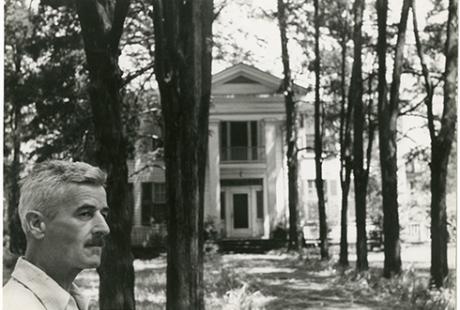
Edward Ayers

Intelligent Television, Alexandria Productions, Insignia Films, and PBS are producing an epic television, education, and library project on the American South in the 20th century. Such an epic project is long overdue.

Read more...

The Mailroom: Hollywood History from the Bottom Up

Mailroom movie poster

In Hollywood they like to say that every American has two businesses—his own, and show business. The fact is, in show business, maybe the most ruthless of all businesses, many of the good and the great—Barry Diller, David Geffen, Michael Ovitz, Bernie Brillstein, Mike Medavoy—are veterans of one part of the ambition factory, the only school for show business: the talent agency mailroom.

Read more...

American Foreign Policy: A Video History

Soldiers marching on street

The history of American foreign policy is studied on campuses throughout the country, with distinguished programs at the undergraduate and graduate level at Columbia, Cornell, Harvard, Rutgers, Texas, Yale, and other institutions. Although in their daily lives students receive information about contemporary American foreign policy (the war on terror, arms treaties, environmental accords) through online and moving-image media, the overwhelming majority of assets deployed in teaching and learning U.S. foreign relations in history, political science, law and economics is textual in nature.

Read more...

The Open Access Documentary Project

using a manual centerfuge

Intelligent Television and BioMed Central are co-producing a set of videos celebrating the benefits of open access to scientific and medical research.

Read more...

Hitler’s Museum

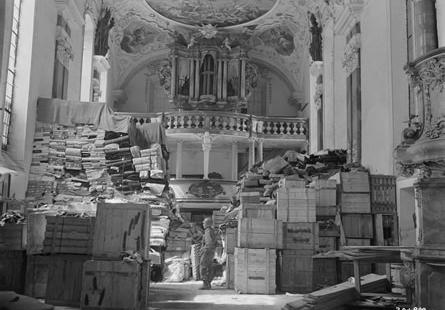
Church with German soldier looking at stacks of art

The Linz Museum—conceived of by Adolf Hitler, designed by architect Albert Speer, financed and administered by Martin Bormann, envied (at times even sabotaged) by Hermann Goering, stocked by Alfred Rosenberg, Hans Posse, Hermann Voss and the Sonderauftraug, or “Special Commission,” of more than 20 of Hitler’s leading art specialists (curators of paintings, prints, armor, and coins, restorers, photographers, librarians, architects, and engineers)—was among the strangest of Hitler’s criminal ambitions, envisioned to become the Nazis’ Smithsonian Institution: a Louvre for the 1,000-Year Reich. A colossal art museum created to house the world’s greatest Aryan cultural achievements, this campus of buildings in Linz was planned to hold works by all of the great masters of Europe that the Nazis bought and seized during the occupation of Europe.

Read more...

The Memory Project

memory scan image

What is a memory? How are memories made? How are memories lost? Erased? How does a group—a society—remember, then memorialize, an event?

Read more...

Literacy: A Visual History

writing on clay tablet

Recent discoveries in the Middle East and new research from scholars worldwide have helped to rewrite what we previously knew—or thought we knew—about the birth and development of literacy and civilization.

Read more...

Harlem

Harlem occupies a unique place in the imagination of black America and the rest of the world. For black urban life and culture, Harlem’s legendary history embodies the struggle for African-American equality; its role as the cultural capital of black America, giving birth to art, literature, music, ideas, and politics, has influenced the lives and minds of minority people worldwide. Though it is a place on an island in a city, centered around its main artery of New York’s 125th Street yet comprising East Harlem, Central Harlem, and West Harlem, reaching north into Washington Heights and Inwood and south into Morningside Heights and upper Fifth Avenue, its influence has never been geographically confined; indeed, as David Levering Lewis, one of its greatest historians has written, Harlem is, was, and will always be as well a “place in the mind”—a “construct of culture”—“to be encountered in brownstones near Howard University in Washington, faculty houses on the Fisk University campus in Nashville, the Algonquin Hotel dining room, or on the left bank of the Seine.”

Read more...

The Coldest Winter: America and the Korean War

American troops in Korean War

American troops fight heroically in a distant land against an unfamiliar enemy whose numbers far exceed their own. Meanwhile their leaders, blinded by hubris and a determination to remake the world, decide to press the attack recklessly in a way that may result in an epic worldwide conflagration.

Sound familiar?

Read more...

For further information about Intelligent Television projects and productions, or to get involved, please contact the company.

 
Intelligent Television logo

Tools to explore

VITAL logo

Video Interactions for Teaching and Learning (VITAL) is a web-based learning environment that enables students to view, analyze, and communicate ideas with video. VITAL was originally created to help students practice their observation and interpretation skills in developmental psychology courses at Columbia University’s Teachers College. Today VITAL is deployed in a wide range of courses and disciplines across Columbia University, from the School of Social Work to the School of the Arts.

Archives for today

San Francisco Bay Area Television Archive

James Baldwin talking with students

The San Francisco Bay Area Television Archive, established in 1982, preserves more than 4,000 hours of newsfilm, documentaries, and other programs produced in northern California between 1939 and 2005.  Among the treasures recently put online are 1960s films of James Baldwin and Maya Angelou and Marlon Brando speaking at the funeral of Black Panther Bobby Hutton. The Archive is part of San Francisco State University Library’s Department of Special Collections.

What we're watching

Forum Network logo

Forum Network
Involving public media and partners in video online.

Vectors logo

Vectors
A new journal in a dynamic vernacular.

Photograph of Jesus video screenshot

Photograph of Jesus
Plus a group shot of the men on the moon.

What we're reading

Mobile Video Capture Soars; Now Brace Yourself for Views and Uploads

Pew reports 34 % of U.S. cell phone customers use their phones to record video. GigaOm reports on this, and notes that YouTube mobile videos increased 160 percent in 2009. Visit Mobile Video Capture Soars; Now Brace Yourself for Views and Uploads

http://wendy.seltzer.org/anticircumvention.pdf

Wonderful piece by Wendy Seltzer about DRM, anti-circumvention, and innovation. "DRM frustrates lawful use and the creation of new technology products with- out saving the entertainment companies from the uncompensated reproduction they feared. In the meantime, it forecloses the open innovation that could lead them and society toward new options that could be better for [...]

AIMS project / born digital archives

"The AIMS project, funded by The Andrew W. Mellon Foundation, represents a co-operative strategy among four partner institutions, to energize collection development in the area of born-digital papers, and to empower librarians and archivists in the management of born-digital assets. The four partners in the project led by the University of Virginia are Stanford University, [...]

Digital Lives

Digital Lives has produced some of the best work on personal archiving, and is holding a seminar about it on Monday, 5 July. Visit Digital Lives

RSS feedmore on the Archival.tv blog