Research
Building a New Form of Production Studio
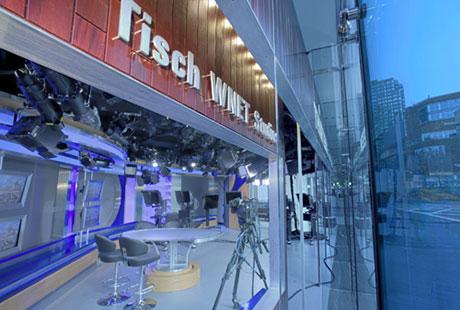
Intelligent Television (with Channel Thirteen/WNET as its fiscal sponsor) has received two years of seed support from the William and Flora Hewlett Foundation to establish a new Open Education Video Studio to catalyze and coordinate video production for the open education resource movement.
The Open Education Video Studio will cost-effectively produce educational video for university needs and make it broadly available. The Studio also will evaluate the use of such video in teaching and learning and build new tools for more cost-efficient video production and distribution worldwide. The Studio’s Production unit will cost-effectively produce educational video for university needs and make it broadly available, catalyzing new open production initiatives at educational institutions and through educational consortia. The Studio’s Research and Development unit will evaluate the use of such video in teaching and learning and build new tools—editing, annotation, search, summarization—for more cost-efficient video production and distribution worldwide.
In its first year, the Studio also will host intensive meetings for educators, technologists, video producers, and other stakeholders who together will help to articulate a sustainability plan for the studio’s productions and research and development projects. In its second year, the Studio will work to organize new multi-institutional collaborations into a distributed educational video production network, and help establish a new educational video commons to define best practices in video preservation and access.
The Economics of Film and Video Distribution in the Digital Age
With the support of the John D. and Catherine T. MacArthur Foundation, Intelligent Television and the Tribeca Film Institute have embarked on an investigation of the current economics of independent film and video distribution in the United States. The “Economics of Distribution” study is currently investigating current financing models for independent educational media; revenues that such film and video productions have realized from sales and licensing and other distribution; and the potential for new, alternative models of video and film distribution in the digital age.
This investigation will inform further research projects on the economics of open content and open educational video, as well as ongoing initiatives to build a new distribution solution for independent producers and creators.
The “Good Terms” Project
Intelligent Television and OCLC/RLG Programs have been studying public-private partnerships for mass digitization and developing recommendations for libraries, museums, and archives, and their commercial partners. The “Good Terms” project (http://www.oclc.org/programs/ourwork/collectivecoll/harmonization/massdigpartnerships.htm) has been examining in detail all publicly-available agreements concerning the digitization of American cultural heritage materials in all media, including video. These recommendations are now available as: “Good Terms—Improving Commercial-Noncommercial Partnerships for Mass Digitization; A Report Prepared by Intelligent Television for RLG Programs, OCLC Programs and Research.” D-Lib Magazine, 13,11/12 (November/December), online at http://dlib.org/dlib/november07/kaufman/11kaufman.html.
Building on the “Marketing Culture” project below, our objective is also to develop a rich resource of publicly available agreements and commentary and also useful model terms for future agreements. This resource is now available online at: http://www.oclc.org/programs/ourwork/collectivecoll/harmonization/massdigresourcelist.htm
The Open Education Video Project
University teaching and learning is involving more and more video and audio. Video (the word “video,” as used here, embraces modern moving-image content and technology, and “audio” the same for recorded sound) is being deployed in the physical classroom to enrich the classroom experience. Video and audio are coming to populate online and distance learning experiences. Video and audio recordings are being made to distribute university lectures and university-based events for audiences well beyond the university campus. As the production and distribution of video and audio increases, the implications for open education initiatives grow more profound.
Intelligent Television and Columbia University’s Center for New Media Teaching and Learning embarked on a new project with the support of the William and Flora Hewlett Foundation to increase the understanding of educators, technologists, video producers, and other stakeholders in how video and open education can work together for the public good. The project sponsored a survey of university uses of video nationwide; prepared detailed case studies of the use of video at two universities; consulted with the Hewlett Foundation on the production of video-recorded lectures; prepared a white paper recommending new approaches to sustain open educational video; and conducted a review meeting on open education and video where these stakeholders in the future of open educational video can better plan for its future. The video and audio from this meeting are available online at:
http://ccnmtl.columbia.edu/opencontent/index.html
The Open Education Video Project has built upon the work that Intelligent Television and Columbia University have been conducting in the area of educational video, open productions, and commercial-noncommercial collaborations. The project has been helping to define new approaches—economic, legal, and editorial—to the creation and distribution of important new resources for open education.
The Economics of Open Content
With the support of the Hewlett Foundation in 2005 and 2006, Intelligent Television brought together business and industry leaders and culture and education stewards to explore new business collaborations between libraries, museums, archives, universities and commercial media and technology enterprises.
The proceedings of these meetings on the economics of open content (available in audio and video online at: http://forum.wgbh.org/wgbh/forum.php?lecture_id=197) highlight emerging economic relationships in media and describe new models for commercial-noncommercial media collaborations involving cultural heritage and educational materials.
Intelligent Television’s Open Production Initiatives serve as one sort of new model for the distribution of open content and open educational content in particular to the broader interested public—a model based in video and film media, produced in the best traditions of documentary television, and meant to be distributed in various complementary ways. The two Open Production Initiatives for this project have been developed in association with Columbia University Center for New Media Teaching and Learning and the Massachusetts Institute of Technology Open Courseware project.
This project explored the potential for new sources of support from the commercial sector for the missions that culture and educational institutions are serving, especially in the realm of digitization and digital media services. The project was intended to have a material impact on the dialogue between these institutions and industry.
The Hewlett Foundation’s support for this project was administered by the New America Foundation, a leading independent, nonpartisan, nonprofit public policy institute based in Washington, DC.
“Open Production Initiatives” and Moving-Image Repositories
With the maturation of newer trends in technology, education, culture, and television especially, there is a profound opportunity to develop and produce new types of valuable educational television projects. Digital technology has rendered the production and distribution of media less expensive, more able to be multi-purposed, more durable, and more portable, so that it can be watched and heard and read on almost every device with a screen or a speaker. University, high-school, and grade-school students and teachers have become accustomed to deploying video and audio assets in the classroom and in homework. Libraries and museums are moving to push parts of their holdings online and on-screen, often converting or even producing rich media to do so. And television producers and distributors are searching for what they call new models of broadcasting in the digital age.
With the generous support of Library and Archives Canada and JISC, Intelligent Television developed new models of “Open Production Initiatives” in association with cultural and educational institutions. The subject of one of these models—the Suez Canal crisis of 1956—drew upon many international collections of materials on the history of the 1956 invasion, the peacekeeping effort that followed, and the history of the Middle East and foreign involvement there.
This Open Production Initiative will make available as widely as possible new and old material produced and reformatted for the programs. The story is about 1) the foreign policies of a number of countries active in the Middle East; 2) a number of countries in the Middle East and the presence of foreign countries and foreign economic interests there; 3) a multilateral peacekeeping operation; and 4) how public interests and public and private media relate to one another in wartime. The collections of video, audio, books, newspapers, films, journals, documents, manuscripts, images, and online resources include those at the BBC Archive; the ITN Archive: the U.K. Public Records Office; the U.S. Library of Congress; the U.S. National Archives and Records Administration; Library and Archives Canada; the Canadian Broadcasting Corporation; Egypt’s Library of Alexandria; Israel’s Ben-Gurion Archives; and materials at other universities, archives, and research collections around the world.
Marketing Culture in the Digital Age
With the support of the Andrew W. Mellon Foundation and Ithaka, Intelligent Television conducted a study of the evolving relationships between commercial and noncommercial organizations in the digitization and publication, broadly defined, of educational and cultural heritage materials. The project’s primary objective is to develop a broad-based understanding of the mechanisms employed in commercial-nonprofit collaborations. There have been an increasing number of these collaborations, with enormous potential to further the causes of education and culture. But there is also a need for more detailed information about them, and for a broader understanding of how these cooperative ventures are structured and managed. The study may be helpful in determining how the different parties involved can preserve and maximize the value of cultural and educational assets.
The project canvassed custodians of commercial-noncommercial relationships at libraries, museums, archives, historical societies, and universities about their business and commercial relationships. The project also interviewed executives in commercial businesses—publishing companies; licensing and merchandising groups; law firms; accounting firms; investment banks; venture capital firms—who have been or may soon be developing roles as stakeholders in public-private partnerships. The project also established a preliminary database of transaction information.
In August 2005, the project completed a preliminary report about these conversations, available from Intelligent Television and Ithaka. As needs warrant and funding allows, the project continues in-depth analysis and reporting and collecting general and specific business, legal, and tax materials for the community.
Commission on Cyberinfrastructure in the Humanities
As scholars in the humanities and social sciences use digital tools and technologies with increasing sophistication and innovation, they are transforming their practices of collaboration and communication. New forms of scholarship, criticism, and creativity proliferate in arts and letters and in the social sciences, resulting in significant new works accessible and meaningful only in digital form. Many technology-driven projects in these areas have become enormously complex and at the same time indispensable for teaching and research.
As the importance of technology-enabled innovation grows across all fields, scholars are increasingly dependent on sophisticated systems for the creation, curation, and preservation of information. They are also dependent on a policy, economic, and legal environment that encourages appropriate and unimpeded access to both digital information and digital tools. It is crucial for the humanities and the social sciences to join scientists and engineers in defining and building this infrastructure so that it meets the needs and incorporates the contributions of humanists and social scientists.
With support from the Andrew W. Mellon Foundation, the American Council of Learned Societies appointed a 10-member national commission on cyberinfrastructure in the humanities and social sciences. The commission carried out research, hearings, and consultations to gather information and develop perspective and issued its report in 2006. The audience for that report includes the scholarly community and the societies that represent it, university provosts, federal funding agencies, and private foundations.
For more information, visit: http://www.acls.org/cyberinfrastructure/cyber.htm
Digital Cultural Institutions Project
As cultural objects are digitized, stored, and mediated by databases and networks, filtered by search engines, and shaped by software and technology design, culture itself becomes available in new ways. The spread of digital technologies is underwriting a rich and growing yet very uneven redeployment of expressive work, from music to literature to film. This redeployment is transforming our capacity to know, experience, and participate in culture, from seemingly simple issues about what we can access and share to more subtle questions about how this new cultural field is represented: e.g., what kinds of cultural activity are made visible and invisible through databases and search engines, and to whom. Despite the importance of this transformation, we are only beginning to ask serious questions about its characteristics, patterns of inclusion and exclusion, and implications for the future.
The Digital Cultural Institutions Project (DCIP) supports research on institutions involved in aggregating digital cultural resources and developing models of access to them. It promotes the integration of knowledge on a range of providers and mediators of digital cultural goods and services—from digital libraries and online museums to commercial online vendors of music and books, search engines and portals, open and collaborative knowledge archives, and file-sharing networks, among others.
DCIP works toward a more comprehensive understanding of the emerging institutional landscape of digital culture and toward a clearer account of the choices we face as participants and stakeholders in that culture. In so doing, it contributes to what is arguably the most important and most impoverished cultural conversation of our time: that of understanding the practical requirements of an equitable, creative, and sustainable digital cultural future, in the United States and across an increasingly global cultural network.
Funding is provided by the Creativity and Culture unit of the Rockefeller Foundation.
For more information, visit: http://www.ssrc.org/programs/ccit/dcip/